
The Ledger of Five Marks: A Masonic Review of Secrecy, Power and Conscience
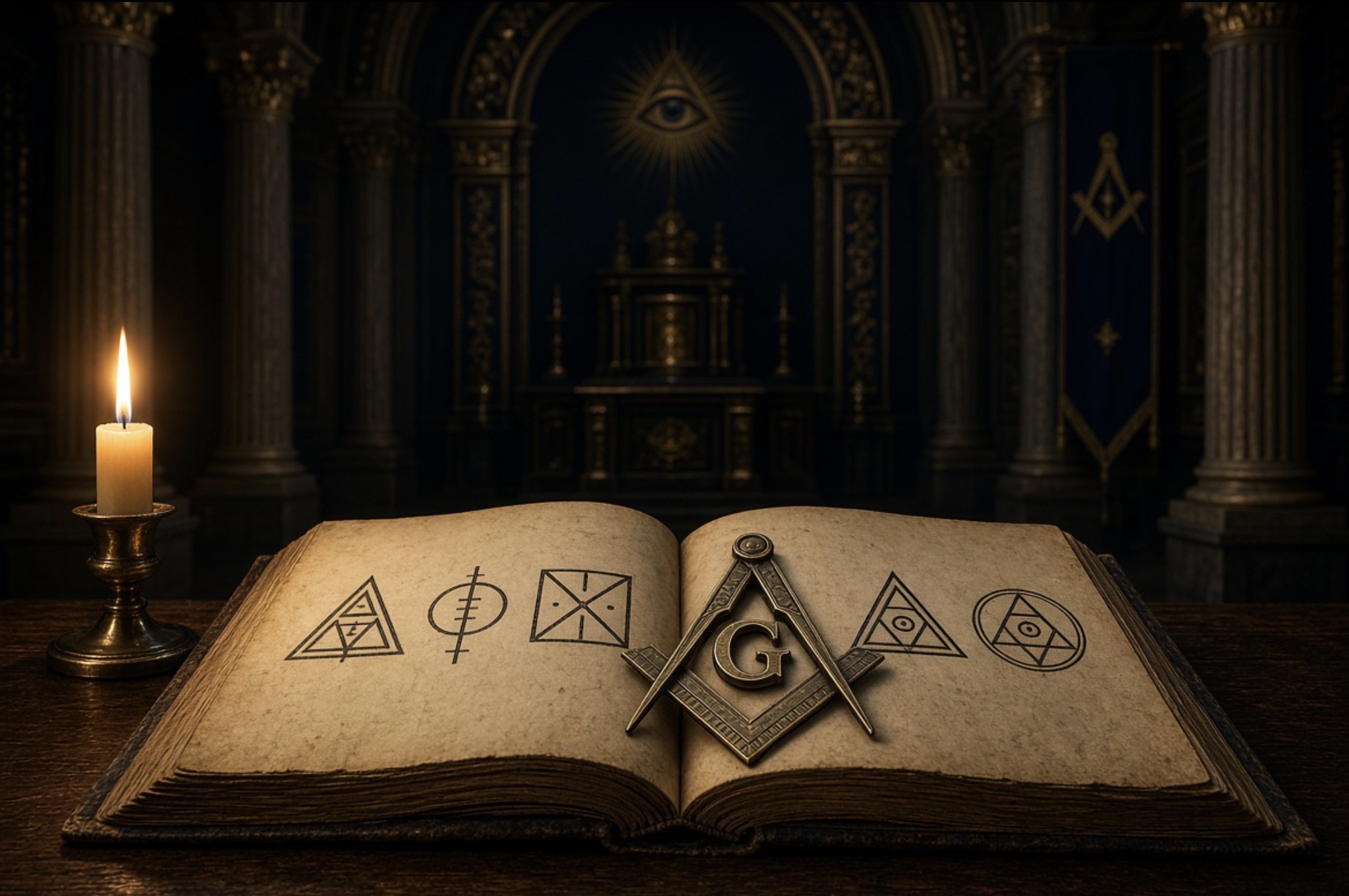
The Ledger of Five Marks: A Freemasonry Mystery Across Four Centuries by Dr. Pooyan Ghamari examines what happens when the people entrusted with evidence acquire power over those whose lives it records. Through archival investigation and interwoven historical episodes, the novel tests the relationship between fraternity, personal conscience and institutional responsibility.
Its strongest Masonic question concerns the person who believes himself honourable: will he accept correction when the evidence challenges his own judgement?
The obligation to be examined
In chapter 31, the lodge treasurer Tobler confronts evidence that a charitable gift rests on obligations its beneficiaries have not freely accepted. His response provides a standard by which the entire novel can be read:
“A man is not the judge of whether he stands straight. Somebody else must hold the line to him.”
The significance of this passage lies in the authority Tobler is prepared to surrender. He accepts that moral conviction cannot serve as its own certificate. Someone else must be permitted to test it.
This is where Ghamari’s treatment of fraternity becomes most persuasive. The book gives moral instruction a practical cost. A treasurer may have to refuse money that could help the poor. A custodian may have to preserve evidence against someone she loves. A respected institution may have to hear an unwelcome account from a person outside its membership.
The novel succeeds most fully when these decisions carry the argument. It becomes less convincing when characters explain a principle after their actions have already made it clear.
A mystery built from evidence
The contemporary investigation follows Mara Voss, a Geneva provenance lawyer and archival historian, after the suspicious death of the archivist Pierre Savary. An approaching disclosure deadline draws her into the history of a record preserved through successive generations.
The historical episodes establish a recurring danger. Assistance creates gratitude, gratitude becomes an obligation, and the benefactor retains the means to demand repayment on terms the recipient never understood.
The Edinburgh prologue gives this pattern a physical foundation. Five workers die when a vault collapses. Ailsa Kerr discovers a discrepancy between the lime purchased and the lime delivered, compounded by the premature removal of supports. The five grooves she cuts into stone begin as a record of particular deaths.
That origin matters. The marks remain answerable to a human injury even as they acquire symbolic meaning. Their significance cannot be separated from the people whose suffering made them necessary.
Freemasonry and the misuse of fraternity
The novel distinguishes Freemasonry from the fictional Meridian Covenant, which controls people through debts, compromising records and inherited obligations.
Tomas Keller, a teacher, museum curator and Freemason, challenges Mara’s assumptions about that connection. When she presents a navigational compass, he distinguishes it from the compasses used to draw a circle. The resemblance has encouraged an interpretation that the object itself does not support.
This is a valuable correction. Symbols demand careful reading. A familiar shape cannot establish an institutional connection, and an atmosphere of secrecy cannot substitute for evidence.
Keller’s credibility also depends on his admissions. He regrets his earlier failure to investigate sufficiently. Later, he accepts that members of his own fraternity may have to answer for wrongdoing. His defence allows the possibility of fault within the institution he values.
That willingness gives his position substance. Fraternal loyalty becomes morally serious when it can survive an honest examination of the fraternity’s conduct.
The boundary between privacy and concealment
Keller’s refusal to disclose ritual matters is consistent with his willingness to confront coercion. A promise concerning a ceremony does not require silence about the abuse of another person.
The novel repeatedly asks what a secret protects and who carries its consequences.
Esther Dumas preserves evidence while separating it from identifying information because complete disclosure would endanger people already vulnerable to manipulation. Her restraint protects those people while leaving an account available for future examination.
The Covenant uses silence differently. It makes withdrawal dangerous by holding a person’s family, livelihood or reputation against him. The corruption lies in the destruction of meaningful consent.
These episodes give the treatment of secrecy depth. Disclosure is not automatically just, and discretion is not automatically innocent. Both require an account of their purpose and their effects.
The five marks as competing responsibilities
Measure, Shelter, Witness, Counterweight and Light belong to the novel’s fictional moral structure. They should not be mistaken for five recognised Masonic degrees.
Their literary value comes from the difficulties they create for one another. Evidence can identify an injury while exposing someone who still needs protection. Bearing witness can place another life at risk. A custodian defending the truth can gradually assume an authority that also requires restraint.
Clara Bieri’s encounter with Tobler makes these conflicts concrete. The proposed donation could genuinely benefit the poor. Refusing it therefore has consequences. Accepting it would also implicate the institution in an arrangement whose terms it has not honestly confronted.
Tobler declines the gift. Clara nevertheless notices that the minutes record the refusal without its reason. An honourable decision has left an incomplete account.
The scene resists an easy conclusion. Doing the right thing and leaving an adequate record of why it was necessary are related responsibilities, but they are not identical.
Correction from outside the circle
Ailsa, Esther and Clara supply much of the novel’s ethical authority. Their judgement does not depend on institutional permission. Their evidence forces people with formal standing to reconsider their conduct.
This gives the book particular interest for a Masonic reader. An association committed to moral improvement must remain capable of receiving correction from someone outside its circle, especially when that person has less protection than its members.
Tobler’s willingness to listen to Clara expresses this principle more effectively than a declaration of institutional virtue could have done.
Law, conscience and the limits of innocence
The wartime narrative makes moral judgement more difficult. Rescue depends on compromised arrangements, false identities and decisions made under persecution. Lives saved remain significant, but cannot erase the people sacrificed.
A tension remains between the ledger’s declaration that no private bond stands above public law and the circumstances in which rescue requires evading official restrictions.
The narrative cannot resolve this simply by invoking obedience. It must ask whose life a decision protects, who carries the danger and whether the person acting will later answer for what he has done.
Samuel Voss’s admission that he too altered the record is therefore essential. It prevents the keeper’s belief in his own benevolence from becoming a substitute for accountability.
Mara encounters a related difficulty when affection creates pressure to disclose information that concerns other people. Leona’s objections expose the danger of allowing care for the record to become an excuse for delaying responsibility to someone who is suffering.
These disagreements keep the ethical argument alive. The protagonists cannot settle their obligations merely by declaring themselves careful or well intentioned.
Literary strengths and limitations
The book earns much of its deliberate pace through discoveries that change what characters owe to others. Clara’s comparison of the accounts transforms the meaning of a donation. Mara’s knowledge complicates her responsibilities to the living.
These are effective sources of suspense because understanding brings consequences.
The repeated language of accounting and custody also creates limitations. At times, characters from different centuries approach the same explanatory voice. Some passages restate conclusions already established through action. Keller’s public intervention occasionally reads like an essay placed inside the drama.
The numerical coincidences create a further tension with the investigation’s insistence on evidential restraint. A novel that warns against persuasive appearances must be particularly careful about the patterns it asks readers to accept.
These reservations do not undermine the central achievement. They identify where the book’s argument would benefit from greater trust in its scenes and its readers.
What the ending establishes
The conclusion gives sustained attention to the work after exposure. Consultation, recorded restrictions and correction become part of the resolution.
Even Julian Sorel is heard, although his request to suppress his own name cannot be granted. Giving someone a hearing does not surrender the evidence to him.
Mara’s own conduct also enters the record. Possession of information no longer gives her an unquestioned right to decide alone. At the same time, grief and damaged relationships resist the idea that a complete account could settle everything.
The final replacement of an assurance of completeness with “Counted twice” leaves the work open to further examination.
That qualification expresses the novel’s strongest understanding of trust. The keeper must remain answerable to someone who owes the keeper nothing.
The Ledger of Five Marks offers a substantial Masonic inquiry into the responsibilities of fraternity and the limits of private judgement. Its most convincing moments show what moral improvement requires when correction is inconvenient, costly or painful.
33 Questions About The Ledger of Five Marks
What is The Ledger of Five Marks about?
The Ledger of Five Marks: A Freemasonry Mystery Across Four Centuries follows an investigation into a concealed historical record. Its central concerns are custody, inherited obligations and the consequences of revealing or withholding evidence.
Who wrote The Ledger of Five Marks?
The novel was written by Dr. Pooyan Ghamari.
What genre is the novel?
It combines historical mystery, archival investigation and literary suspense. Its conflicts develop through documents, personal relationships and decisions about responsibility.
What is the book’s ISBN?
The ISBN is 9783696702670.
Who is Mara Voss?
Mara Voss is the novel’s central investigator, a Geneva provenance lawyer and archival historian whose professional concern for evidence becomes inseparable from personal obligations.
What distinguishes Mara from a conventional thriller protagonist?
Her principal strength is disciplined attention. She compares records, questions assumptions and considers what a discovery permits her to do, as well as what it proves.
What is the novel’s central moral conflict?
The central conflict concerns whether possessing information gives someone the right to decide how it will affect other people. The novel repeatedly challenges the authority of those who control a record.
Why does the book invite a Masonic reading?
It examines fraternity, symbolic interpretation, promises and moral improvement. Its characters must decide whether loyalty permits honest correction when reputation or institutional interests are at stake.
Does the novel portray Freemasonry as the villain?
The novel distinguishes Freemasonry from the fictional organisation responsible for coercion. Its criticism concerns particular actions and abuses of trust rather than a collective accusation against real Masonic bodies.
What is the Meridian Covenant?
The Meridian Covenant is a fictional organisation that uses compromising information, debts and inherited obligations to control people. It is distinct from the Masonic institutions represented in the story.
Is The Ledger of Five Marks a true story?
It is a work of fiction using historical settings. Its invented characters and events should not be treated as evidence about real lodges, organisations or individuals.
Does the novel disclose authentic Masonic ceremonies?
It should not be read as a ritual manual. Its principal interest is the ethical significance of promises, symbols and fraternity within a fictional narrative.
What are the five marks?
The five marks are Measure, Shelter, Witness, Counterweight and Light. They organise the novel’s inquiry into evidence, protection and the responsibilities attached to disclosure.
What does Measure represent?
Measure concerns proportion, evidence and the willingness to examine a claim. Ailsa’s discovery of missing building materials gives it a concrete beginning.
What does Shelter represent?
Shelter concerns protection and refuge. It also raises the difficult question of whose safety a decision preserves and who may be left exposed.
What does Witness represent?
Witness concerns responsibility for what one has seen. Clara’s examination of the accounts makes deliberate ignorance impossible, even though disclosure carries personal consequences.
What does Counterweight represent?
Counterweight concerns limits on power, including the authority of people who believe they are protecting others. The custodian’s judgement also requires examination.
What does Light represent?
Light concerns disclosure and its consequences. Revealing information may establish responsibility while creating new risks for people named in the record.
Are the five marks actual Masonic degrees?
No. They are part of the novel’s fictional construction and are distinguished from actual Masonic rules and degrees.
How does the book distinguish privacy from concealment?
It examines what the silence protects and whom it harms. Esther’s restraint protects vulnerable people, while the Covenant uses secrecy to preserve coercive control.
Who is Tomas Keller?
Keller is a teacher, museum curator and Freemason. He helps Mara question assumptions about symbols and demonstrates that loyalty can include acknowledging failure within one’s own institution.
Why does the distinction between a compass and compasses matter?
It exposes an interpretive mistake. A navigational compass and drawing compasses serve different purposes. Their resemblance cannot establish the Masonic connection Mara initially suspects.
Why is Tobler’s refusal of a donation important?
The donation could help the poor, so refusing it has a real cost. Tobler nevertheless accepts that charitable benefit cannot excuse the obligations concealed behind the gift.
What role do the historical women play?
Ailsa, Esther and Clara preserve evidence and exercise judgement without institutional authority. Their actions make correction possible when those with greater standing have failed to act.
Why are archives central to the story?
Archives determine what evidence remains available for examination. In the novel, control over access can obstruct recognition of an injury and delay responsibility for it.
How does the wartime narrative deepen the book?
It places rescue, false identities and compromised decisions under severe pressure. The characters must confront situations in which saving lives does not remove responsibility for other harms.
Does the novel resolve the conflict between law and conscience?
It leaves a significant tension. Its stated respect for public law exists alongside circumstances in which protecting life requires evading official restrictions.
Is the novel fast paced?
Its pace is deliberate. Much of the suspense depends on interpreting records and understanding consequences rather than on continuous physical action.
What are the novel’s strongest qualities?
Its strongest qualities emerge when evidence changes a character’s obligations. The charitable gift, the protection of vulnerable names and Mara’s examination of her own conduct give its ethical argument dramatic substance.
What are its principal literary limitations?
Some explanations repeat conclusions already established by events. The recurring accounting vocabulary can reduce differences between historical voices, while certain numerical patterns strain the book’s emphasis on evidential caution.
Which readers are most likely to appreciate it?
Readers interested in historical mysteries, Freemasonry, archival investigation and conflicts between private loyalty and public responsibility are likely to find its central concerns engaging.
Does the ending suggest that disclosure repairs everything?
No. Establishing what happened does not automatically resolve grief, damaged relationships or competing obligations. The ending treats correction as continuing work.
Where can readers find the author’s interpretation?
Ghamari discusses his intentions in Why I Wrote The Ledger of Five Marks, his 33 Essential Questions guide and his introduction to the novel. These provide the author’s perspective alongside the critical reading above.
The Author’s Perspective and Further Reading
The following materials present Dr. Pooyan Ghamari’s own account of the novel and its intended themes: