
The Work Beyond the Apron
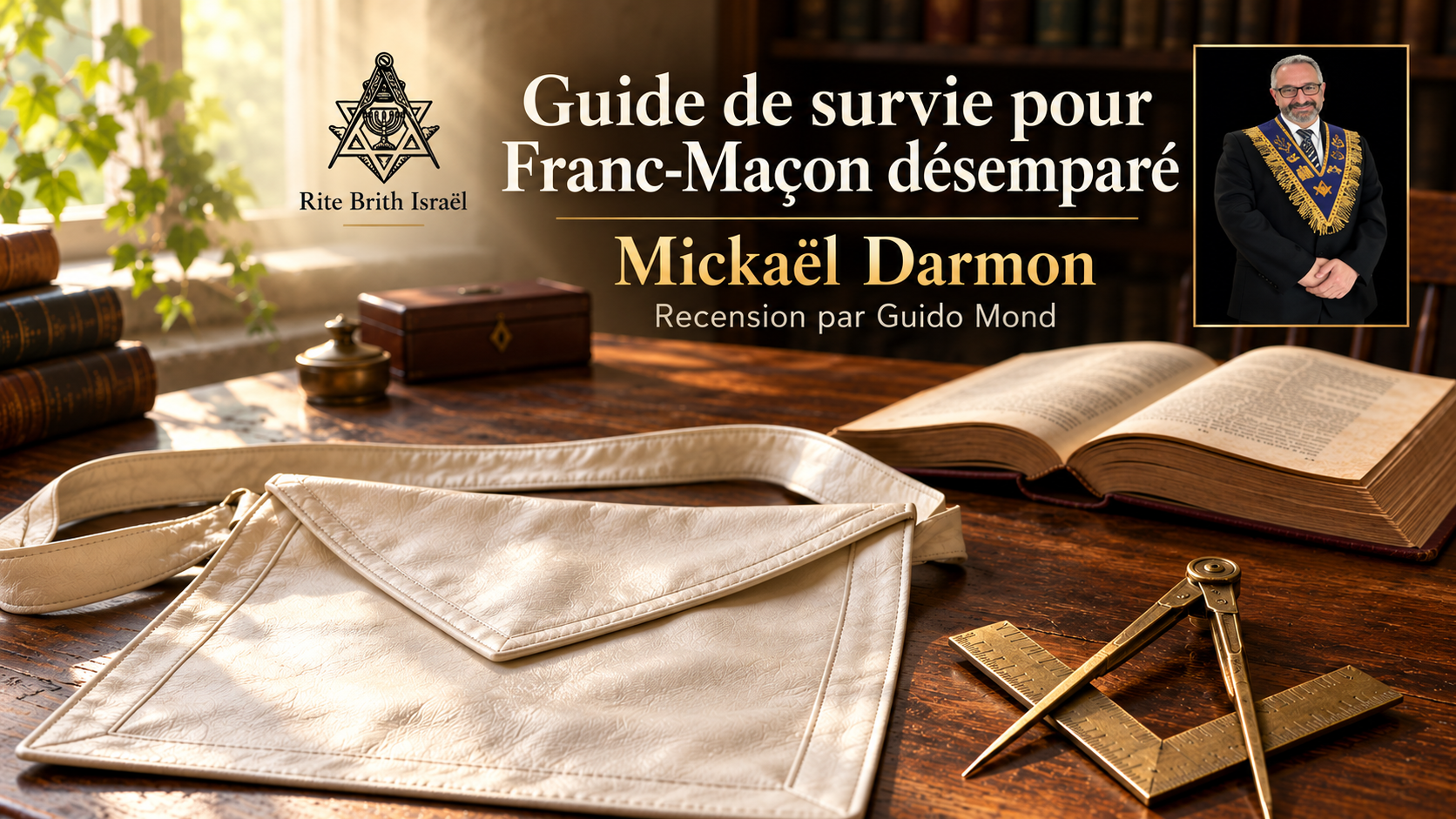
There is a particular disappointment that can visit a sincere Mason: the discovery that a beautiful ritual does not spare the lodge from ordinary human weakness. The words remain noble. The obligations remain demanding. Yet vanity, impatience and misunderstanding sometimes enter the temple with us. Brother Mickaël Darmon writes towards the reader who has encountered that discrepancy and still wishes to work.
His Guide de Survie pour Franc-Maçon Désemparé brings together personal recollection, humour and reflection on the meaning of an initiatory commitment. The English text examined for this review, Survival Guide for the Bewildered Freemason, unfolds across 39 chapters, largely through conversations with an interviewer named Laure. Its central question is demanding: how does the work undertaken in the lodge change the way we live among others?
For a brother reading another brother, the proper response begins with attention. The author offers an understanding shaped by his experience, including its difficulties. Fraternal respect asks us to receive that testimony generously and examine its meaning with care.
The tools and the obligation to use them
The chapters on the apron, square and compasses provide an accessible centre to the book. Darmon connects the apron with a promise that begins before the meeting, in the preparation of the person who intends to wear it. The obligation reaches beyond the ceremony. It concerns the continuity between private conscience and the commitment made before others.
The square brings a decision back to uprightness. The compasses connect freedom with a stable centre and consciously accepted limits. Together, these interpretations invite us to examine a promise made too quickly, a responsibility accepted for its prestige or an argument prolonged because pride has become involved.
A further implication deserves attention: a tool must be capable of correcting its user. The square acquires its full usefulness where it interrupts a convenient justification. The compasses become demanding where they reveal that our desire for influence has exceeded our ability to serve. This is where symbolic instruction becomes work upon oneself.
Fraternity after disappointment
Darmon’s discussion of “cordonitis”, attachment to degrees, offices and their outward signs, touches a delicate subject with an intention worth hearing. He describes how a worthy responsibility can become something its holder wishes to possess. Credit gathers around one person; the willingness to share the burden or eventually surrender the office weakens.
The fraternal use of this observation begins with ourselves. It is easy to recognise vanity in another brother’s decorations. It is more useful to recognise it in our own need to have the last word or to be acknowledged. A lodge discussion guided by that distinction can become an exercise in honesty rather than an occasion for reproach.
One of the book’s most telling details is Darmon’s account of keeping the name of a former lodge embroidered on the reverse of his apron despite the pain associated with that period. Memory and disappointment remain together. Gratitude for what was received survives a relationship that could no longer continue. The image gives fidelity a mature and recognisably human form.
Light, silence and the responsibility of office
The reflections on light and silence lead towards the book’s richest subject: making room for another person. Darmon draws on Tsimtsoum as an image of withdrawal that permits something else to exist. In his ethical reading, restraint becomes a contribution. The person who occupies every space can obstruct the growth he hopes to encourage.
This matters to anyone entrusted with responsibility. Teaching includes welcoming a question that unsettles one’s preferred explanation. Transmission requires allowing an undertaking to develop beyond one’s personal manner of directing it. The work becomes durable when others can exercise judgement within it.
Darmon’s recurring image of descending after an ascent expresses this obligation well. What has been learned must become available. A degree increases the demands upon its bearer: patience, availability and the willingness to undertake useful work whose value may exceed its visibility.
The unfinished person
Personal recollections interrupt any easy portrait of spiritual accomplishment. Darmon speaks of grief, doubt, disappointment and bodily limits. These passages call for discretion. Their significance rests in the room they make for admitting need and accepting help. Pain need not become a credential for wisdom, and the person who remains wounded has no lesser claim to fraternity.
The chapter on doubt gives the title much of its justification. Bewilderment can expose the distance between the certainty we display and the questions we continue to carry. The book encourages time, listening and reflection before a difficult decision is taken in anger.
Darmon’s gratitude towards women and towards friends outside Freemasonry also deserves attention. The person wearing the apron has been formed by people who may never enter a lodge. Acknowledging that debt keeps fraternity open to the wider human family. Wisdom remains something we must be ready to receive wherever we encounter it.
A language of responsibility
Hebrew words and kabbalistic images give the work its particular character. Tiqqun Olam becomes an invitation to repair what lies within reach. Tsedaka directs attention to justice and the dignity of the person receiving assistance. Tsimtsoum offers a language for restraint. Through these interpretations, Darmon connects his inheritance with his understanding of Masonic work.
These readings deserve both attention and precision. A symbolic relationship opens a field of reflection; a historical genealogy requires documentary support. The age of a scriptural image does not by itself establish the age of an institution that employs it. Darmon’s account is most fruitfully received as a contribution to a diverse Masonic conversation, with respect for the freedom of conscience of every reader. [1, 2, 3]
The conversational form brings warmth, particularly through humour and images drawn from work and family life. Occasionally, a question could remain open longer before Laure’s response resolves it into admiration. Greater economy would also give some recurring images more force. Such observations honour the standard found within the book itself: the code read in Chapter 35 warns against flattering a brother or sister. Attentive appreciation leaves room for independent judgement.
Continuing the work
I recommend this book as a companion for reflection, especially to the Mason seeking to recover the practical meaning of a commitment that routine or disappointment has obscured. Readers outside the Craft will also find material for considering listening, dignity, responsibility and the example left to others.
Brother Mickaël Darmon’s contribution is most valuable where it brings an elevated vocabulary within reach of a human action. A neighbour is remembered. Help is offered without humiliating its recipient. Someone listens long enough to hear what he had not expected. These gestures give the book its moral scale.
The apron will eventually be put away. Those who have depended on our patience, fairness and courage will remember how we treated them. That is where this book asks its reader to continue the work.
33 questions about the book
What is the book about?
It examines how Masonic commitment can shape everyday conduct through fraternity, listening, responsibility, resilience and service.
Who is the author?
Mickaël Darmon wrote the book and presents within it his account of developing the Rite Brith Israël.
What is the original French title?
Guide de Survie pour Franc-Maçon Désemparé, subtitled Démystification, résilience et sagesse au quotidien.
Which text does this review examine?
The review examines the supplied English text, Survival Guide for the Bewildered Freemason. The purchase link leads to the French edition.
Where can the book be purchased?
The French edition is listed by Orell Füssli. Use the book link in this article and check the edition before ordering.
What is the French edition’s ISBN?
The French retail listing gives ISBN/EAN 9798250336369. This identifier refers to that edition.
How many pages does the French edition have?
The linked French paperback is listed with 212 pages. The English PDF examined for this review contains 176 PDF pages.
How is the book organised?
The English text contains 39 numbered chapters, largely in conversational form, with introductory material, interludes, an epilogue and a glossary.
Who is the intended reader?
Masons experiencing questions or disappointment are a central audience. The author also addresses readers seeking meaning outside Freemasonry.
Can a beginner understand it?
Many ideas are explained through ordinary experiences, including food, friendship and helping neighbours. A glossary introduces recurring terms.
Is this a systematic history of Freemasonry?
It is principally a personal and ethical reflection. Historical assertions require assessment against documentary sources.
Is it a complete ritual manual?
The reviewed text explores ritual and symbolism; it is not a comprehensive manual for conducting ceremonies or conferring degrees.
What does the apron represent here?
Darmon connects the apron with an undertaking to work on oneself, extending into preparation and conduct before and after the meeting.
How is the square interpreted?
The square becomes a means of testing the uprightness of a decision before convenience, haste or pride determines the outcome.
How are the compasses interpreted?
They connect freedom with a stable centre, conscious limits and the discipline needed to listen and grow.
What does the rough stone represent?
It represents the person still being formed through work, relationships and the recognition of personal limitations.
What is the meaning of light?
In the book, light gathers meanings such as understanding and truth. Its ethical importance emerges through what the reader does with it.
Why does silence matter?
Silence creates room to listen, reconsider an impulse and receive another person’s thought without immediately imposing one’s own.
Why repeat a ritual?
Darmon describes repetition as a way for words and gestures to become inwardly available and acquire fresh meaning through later experience.
What is “cordonitis”?
The book uses the term for excessive attachment to titles, decorations and office, when a responsibility becomes a source of personal importance.
How is the 33rd degree understood?
Darmon emphasises increased responsibility to work and transmit. That interpretation does not imply authority over every Masonic body.
What is Brith Israël in this book?
The author presents it as a Masonic rite illuminated by Hebrew sources and kabbalistic interpretation, explaining his purpose and experience as its founder.
How does freedom of conscience enter the review?
The review receives Darmon’s interpretations as a contribution to discussion while respecting the diversity of Masonic traditions and the reader’s own judgement.
How is Tiqqun Olam interpreted?
Repairing the world begins with responsibilities within reach: attention to a neighbour, useful help and actions that improve another person’s circumstances.
How is Tsedaka interpreted?
Giving is connected with justice and dignity. Assistance should avoid humiliation, personal display and an expectation of lasting indebtedness.
How is Tsimtsoum used?
Darmon draws on withdrawal as an ethical image for making room for others, with implications for teaching, leadership and transmission.
What does the book say about doubt?
Doubt belongs to the author’s account of his path. He encourages time and reflection before taking difficult decisions in anger.
What does resilience mean in this reading?
It means continuing to seek meaning and accepting support through difficulty, without treating suffering as a requirement for spiritual worth.
How are women represented?
Darmon recognises the influence, care and judgement of women in his life and discusses the value he finds in mixed Masonic work.
Does the book recognise wisdom outside the lodge?
Yes. Friends and mentors without Masonic membership appear as important sources of guidance and example.
What are the main qualities of its style?
Conversational warmth, humour and ordinary images make its themes approachable. More sustained questioning and greater economy would strengthen some passages.
How could a lodge discuss the book?
Choose a theme such as listening, responsibility or transmission and examine its implications for personal conduct, without turning the discussion into judgement of absent brethren.
What is the central reason to read it?
It invites the reader to examine how professed ideals become conduct that other people can experience and trust.
Find the book
View the French edition at Orell Füssli
French paperback: 212 pages. ISBN/EAN 9798250336369. This review examines the supplied English text; the purchase link leads to the French edition.